

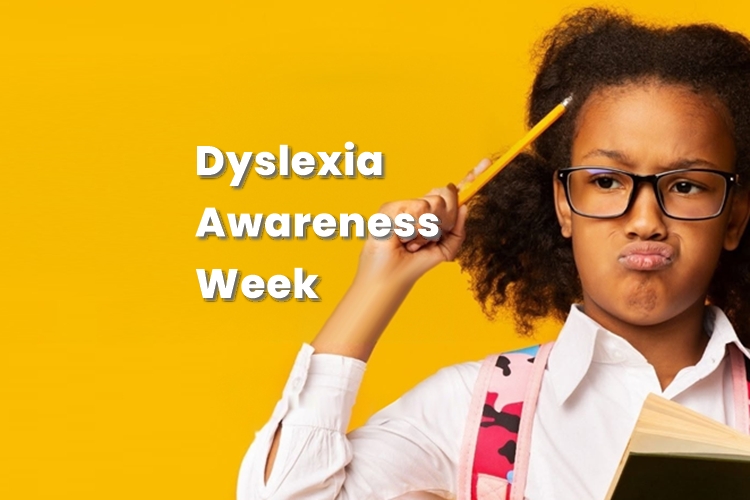
This week is Dyslexia Awareness Week, and it’s the perfect moment to talk about something that touches more families than you might think. Around 1 in 10 people in the UK are dyslexic, which means there’s a good chance a child you care for, or will care for in future, is one of them. Whether you’re already fostering or just thinking about it, here’s what dyslexia is, how to spot it, and the simple things that can make a real difference.
So, what actually is dyslexia?
Dyslexia is a learning difference that affects how the brain processes written and spoken language. It’s lifelong, it often runs in families, and it has absolutely nothing to do with how clever a child is.
It mainly affects things like:
- Reading, especially reading quickly or accurately
- Spelling and writing
- Remembering sequences, such as the days of the week or a list of instructions
- Organising thoughts and belongings
But dyslexia isn’t just about challenges. Lots of dyslexic children are brilliant at creative thinking, problem-solving, storytelling and seeing the bigger picture. Our job is to help them see those strengths too.
Why dyslexia can be missed for children in care
Children who come into foster care have often had a bumpy ride, and that can make dyslexia harder to spot. They may have:
- Moved between several homes or schools
- Missed chunks of their education
- Been dealing with a lot emotionally, so struggles with reading get put down to stress or behaviour instead
This is where foster carers can be such a powerful force for good. You see the child day to day, and you’re often the first person to notice that something isn’t quite clicking.
Signs to look out for
Every child is different, but some common signs include:
- Finding reading slow or tiring, or avoiding it altogether
- Mixing up letters like b and d, or getting words in the wrong order
- Spelling the same word differently on the same page
- Struggling to follow several instructions at once
- Being great at explaining things out loud, but finding it hard to get them down on paper
- Getting frustrated, upset or “switching off” when it’s time for homework
Spotting one or two of these doesn’t mean a child is dyslexic, but if you notice a pattern, it’s well worth raising.
How you can help at home
You don’t need to be a teacher or an expert to make a big difference. A lot of it comes down to patience and encouragement.
- Read together, little and often. Short, relaxed sessions beat long ones. Take turns, use audiobooks, and let them choose books they love.
- Praise effort, not just results. Dyslexic children often work twice as hard to get the same outcome, so notice that.
- Break things down. Give one instruction at a time, or write a simple checklist with pictures.
- Try helpful tools. Coloured overlays, audiobooks, text-to-speech apps and voice typing can all take the pressure off.
- Celebrate their strengths. Whether it’s art, sport, building things or making people laugh, make sure they know what they’re great at.
- Keep homework calm. Little breaks, a quiet space and a snack can make all the difference.
Working with school
If you think a child in your care might be dyslexic, school is a great place to start. It helps to:
- Have a chat with their class teacher and the school’s SENCO (Special Educational Needs Coordinator)
- Speak to the Designated Teacher for children in care, who is there to champion their education
- Make sure support needs are included in the child’s Personal Education Plan (PEP)
- Keep your supervising social worker in the loop, so everyone is pulling in the same direction
You’re the child’s advocate, and you know them best. Never be afraid to ask questions.
You’re never on your own
At Banya Fostering, we know that every child deserves the chance to shine, in the classroom and beyond. Our carers get ongoing training, support and a team behind them, so if a child in your care needs extra help with their learning, we’ll be right there with you.
Thinking about fostering? We’d love to have a chat. Find out more at www.banya.co.uk.
