

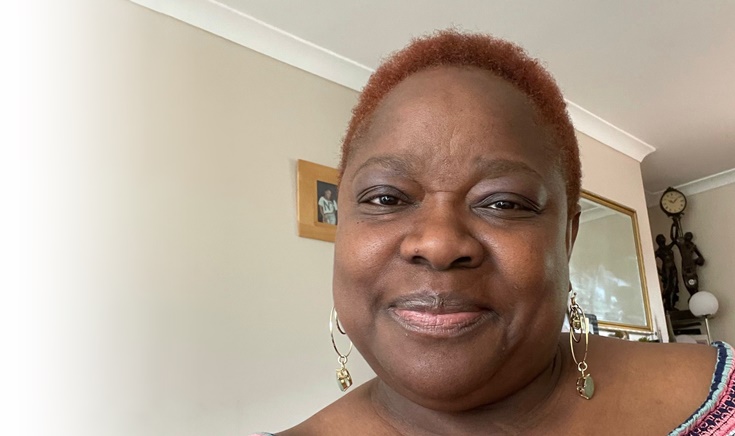
Growing up in Ghana as one of six siblings, home was always a bustling and busy place for 54-year-old foster carer, Pep. The nurturing and loving environment of her childhood was further enhanced by the fact that there could be as many as ten additional children staying in the family home at any one time.
“My mother was a midwife who ran clinics and worked in the community to look after babies, so our home came to be seen locally as a place of love and security for children,” says Pep, who often helped her mother ensure the children had everything they needed.
Her upbringing laid the groundwork for Pep wanting to spend her own life looking after children and, after graduating from university in Ghana, she came to the UK and soon enquired about fostering. “I was told I couldn’t do it at first,” says Pep, “because any child coming in wouldn’t have been able to have a room completely to themselves, so I put it to the back of my mind for a few years. I always knew I’d revisit it when the time was right, though, because it was something I’d always felt so passionately about. I desperately wanted to do it.”
The wellbeing of children remained a central driver in Pep’s life and, after many years working as a childminder and subsequently running her own nursery, she again enquired about the possibility of becoming a foster carer. “My own children had left home by this point and were settled in their own homes and lives,” says Pep, “so I now had two rooms available and felt the time was right for them to be offered to children who needed them.”
After applying to foster with Banya, Pep was initially approved to foster sibling pairs or groups and, four years ago, her first two foster children arrived. Initially there for two weeks of respite care, the pair ended up remaining with Pep for several years and have kept in touch with her after moving on to begin their own lives as adults.
Pep says the differences between teenagers in the UK and teenagers in Ghana surprised her at first and it took a little while to adjust. “In this country, children are taught that they have a voice and they’re supposed to use it to question things,” says Pep. “They challenge you. This is very different from Ghana where you always do as you are told and you don’t question why. I had to get used to this but I do think it’s a good thing that they challenge. They should have a voice. They should kick back.”
Pep says that setting clear boundaries and expectations from the start combined with providing lots of love and acceptance has been the key to managing vulnerable teenagers who come from challenging backgrounds and, while it hasn’t always been easy, she feels strongly that what everyone who comes to her has in common is wanting and needing love and security.
“Boundaries are so important in this, “ says Pep. “It’s not just a matter of giving the children a standard to rise to and letting them know what is acceptable and what isn’t; proper boundaries help to make children feel loved and secure and it’s often that sense of security they need most of all.”
Pep has now been approved for all round fostering and, as well as teenagers, has also taken care of six mothers and babies who have come to live with her when they’ve needed some extra support. Time spent under Pep’s roof means they get one-to-one help and guidance with understanding their baby’s needs and how best to meet these while still looking after themselves.
“The aim is to keep the baby with the mother,” says Pep. “If we can get the mother to the point where we can prevent the baby having to be taken into care, then this is the best outcome for everyone. Of course, this doesn’t always happen and in those cases it’s incredibly sad but, more often than not, I’ve been able to help turn things around. It’s rarely the case that the mother doesn’t want to do it and usually just that they don’t know how because they’ve come from chaotic backgrounds themselves. What’s needed is care and understanding, mixed with very practical guidance.”
Seeing the majority of people who come into her care do well is the most satisfying part of it for Pep. “I just want to see them thrive,” she says.
Pep’s daughter is now looking to follow in her mother’s footsteps and become a foster carer herself, having seen how fulfilling it has been to help children rise to reach their full potential. “She knows there are challenges along the way,” says Pep. “Getting used to sharing your home with strangers and never knowing who might come through the door takes some getting used to, but the fact that everyone is different is also one of the most interesting aspects of fostering. Seeing the children do well because you’ve put them at the centre of things and given them love and safety is the most rewarding thing in the world. My enthusiasm for it only increases the longer I do it and I’m incredibly proud that it’s a legacy my daughter wants to continue.”
If you would like to find out if you match the criteria to become a foster carer complete our fostering questionnaire and you’ll get immediate feedback.
